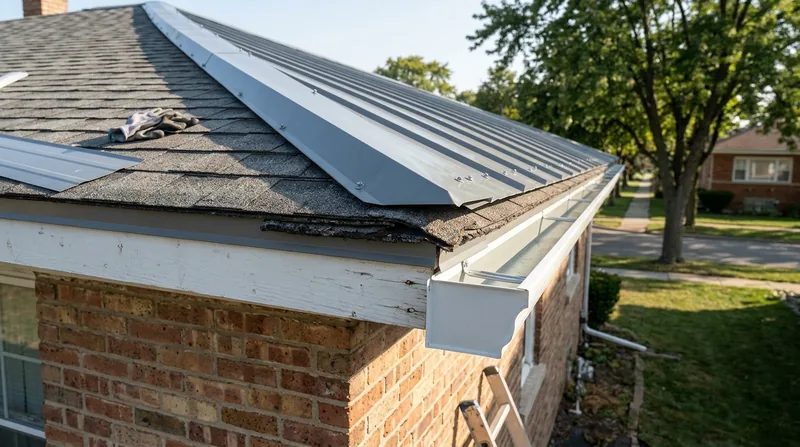




Metal roof over shingles (retrofit) in Chicago is the fastest way to upgrade a worn asphalt roof without the mess and cost of a full tear-off. Our city sits on a flat glacial lake plain, and thousands of brick bungalows from the Bungalow Belt on the Northwest and Southwest Sides still carry their original low-pitch hip roofs under two or three layers of shingles. A metal retrofit adds a durable, snow-shedding skin right over that deck, cutting landfill waste and shaving days off the job. On the flat lots of Logan Square, Bridgeport and Rogers Park, that matters when the alley is tight and the neighbor's fence is two feet from the eave. We check the deck first, tell you honestly when tear-off is the better call, and install panels that handle Chicago's wet snow, ice dams and freeze-thaw cycles. See how this fits our broader metal roof installation in Chicago work.
Why Metal Roof Over Shingles Makes Sense on Chicago's Bungalows and Ranches
Chicago's housing stock was built for a different climate era. The brick bungalows and two-flats along the Bungalow Belt were framed with shallow hip roofs that collect snow and back up ice at the eaves. Asphalt shingles on those low slopes fail early here, and the freeze-thaw cycles from December through March work at every seam. A retrofit metal roof sheds that load instead of holding it, and it does it without adding a tear-off dumpster to a 25-foot lot.
- We leave the existing shingle layers in place when local code allows, which keeps the job to one or two days on a typical bungalow.
- We install a metal roof that sheds wet lake-effect snow and resists the hail and derecho winds that hit Cook County in summer.
- We reduce landfill waste by several tons per roof compared with a full tear-off.
- We keep the original roof as a second weather barrier over the deck.
- We cut material and labor cost compared with a full replacement on the same footprint.
That combination is why retrofit work is growing fastest on the low-pitch brick homes of Jefferson Park, Edison Park and the inner suburbs.
Key info: On a 1920s brick bungalow in Portage Park with two shingle layers and a 4/12 hip, we can often retrofit a standing seam or metal shingle roof in one day. The same roof in a historic district may need design review before we order panels. Always verify local rules with the Chicago Department of Buildings.
How We Install a Metal Roof Over Shingles in Chicago
Every retrofit starts with the deck, not the panels. We walk the roof, probe the sheathing from the attic where we can, and check the flashing at chimneys, skylights and sidewalls. If the deck is soft or the existing shingles are curling and cupping, we tell you straight: tear-off is the better call. When the deck is sound, we build the retrofit in a fixed sequence so nothing gets skipped.
- We inspect the deck, rafters and existing flashing, then document any soft spots with photos.
- We confirm the layer count against local code limits before we commit to a recover.
- We install a slip sheet or underlayment over the old shingles to isolate the metal from the asphalt.
- We fasten horizontal purlins or a subframe when the panel profile or snow load requires it.
- We set new eave trim, rake trim and a proper drip edge to move water away from the fascia.
- We install the panels, then reflash the chimney, skylights and sidewalls with new metal.
- We add snow guards above walkways and doors, and check the gutters for the new runoff volume.
- We walk the roof with you, hand over photos, and leave the site clean.
On a 1950s brick ranch in Edison Park, that sequence typically means one day for prep and one for panels. On a steep Queen Anne in Beverly, we plan for staging and more flashing detail.
Key info: A homeowner in Oak Park had three layers of shingles on a low-pitch hip and wanted a standing seam look. We measured the deck, found it sound, and installed a retrofit with a subframe and new chimney flashing. We also added snow guards and ice protection above the back door where ice had been shearing off.
Retrofit Approaches We Use on Chicago Roofs
Not every panel goes over shingles the same way. The right approach depends on your roof pitch, the number of existing layers, and whether the home sits in a historic district or HOA. Here is how we match the method to the building.
| Approach | Description | Best for |
|---|---|---|
| Direct overlay with slip sheet | We lay an isolation membrane over the existing shingles and fasten panels through to the deck. | Sound single-layer roofs on bungalows and ranches. |
| Purlins over shingles | We build a horizontal subframe to create a drainage plane and a flat mounting surface. | Low-pitch hips and roofs with two existing layers. |
| Standing seam retrofit | We install concealed-fastener standing seam panels over the prepared deck. | Homeowners who want a clean profile and long service life. |
| Metal shingle or stone-coated steel retrofit | We install stamped or stone-coated panels that mimic the original roof look. | Historic districts and HOA communities with design rules. |
| Partial tear-off and retrofit | We strip failed sections, repair the deck, then retrofit the rest. | Roofs with localized rot or storm damage. |
We choose the approach after we see the deck, not before, because the wrong method shows up as leaks at the first ice dam.
Metal Roof Over Shingles (Retrofit) Cost in Chicago: What to Expect
Most Chicago retrofit projects start around $7 per square foot and climb from there. That figure covers the isolation layer, standard trim and labor on a straightforward single-story roof. On a two-story subdivision home in Naperville or Orland Park, scaffolding and staging push the number up. On a steep Victorian in Beverly, the extra safety and flashing detail do the same.
- Roof size and pitch drive the total, since steep roofs need more staging and slower work.
- The number of existing shingle layers affects prep time and whether code allows a recover at all.
- Panel choice matters: exposed-fastener corrugated costs less than standing seam or stone-coated steel.
- Access is a real factor on tight city lots in Logan Square, where a dumpster or lift may not fit.
- Flashing complexity at chimneys, skylights and sidewalls adds labor on older homes.
- Historic district or HOA design review can add time and paperwork before panels are ordered.
We recommend getting two or three estimates so you can compare scope, not just the bottom line. A low bid that skips the slip sheet or reuses old flashing is not a bargain. Our full pricing overview breaks down what each line item covers.
Metal Roof Over Shingles (Retrofit) Near Me: How to Hire a Contractor Near Chicago
Hiring for a retrofit is different from hiring for a tear-off. The contractor has to judge whether your existing deck and shingle layers can carry a new roof, and that judgment is where cheap jobs fail. Ask for a license and insurance certificate, and confirm the policy covers roofing work in Illinois. Get at least three written estimates that list the isolation layer, trim, flashing and snow guards separately. Ask for local references on homes like yours, especially brick bungalows or low-pitch ranches. Finally, ask who pulls the permit and how the contractor handles historic district or HOA review. A roofer who shrugs at those questions is telling you something. You can contact us for a free estimate and we will walk you through the deck inspection before you commit.
Metal Roof Over Shingles (Retrofit) in Chicago: Pricing Guide
| Service | Price | Details |
|---|---|---|
| Retrofit over one shingle layer | Starting at $7/sq ft | Includes slip sheet, standard trim and labor on an accessible single-story roof. |
| Retrofit over two or more layers | Starting at $8.50/sq ft | Adds subframe prep and layer verification, common on older Chicago bungalows. |
| Standing seam retrofit | Starting at $11/sq ft | Concealed-fastener panels with premium trim; price rises with roof pitch and flashing detail. |
| Complex or steep-pitch roof | On estimate | Steep gables, turrets and tight city lots need an on-site look before we quote. |
| Travel | Included | In Chicago and surrounding suburbs, no separate call-out or mileage fee. |
| Estimate | Free | Response within 24h at (872) 242-4810, no obligation to book. |
Indicative pricing, the exact cost depends on square footage, finish, and site access. Free personalized estimate within 24h at (872) 242-4810.


